

Outdoor Kitchens
How to Build an Outdoor Kitchen in North Texas: A Step-by-Step Guide
By Colby Coward / August 21, 2026
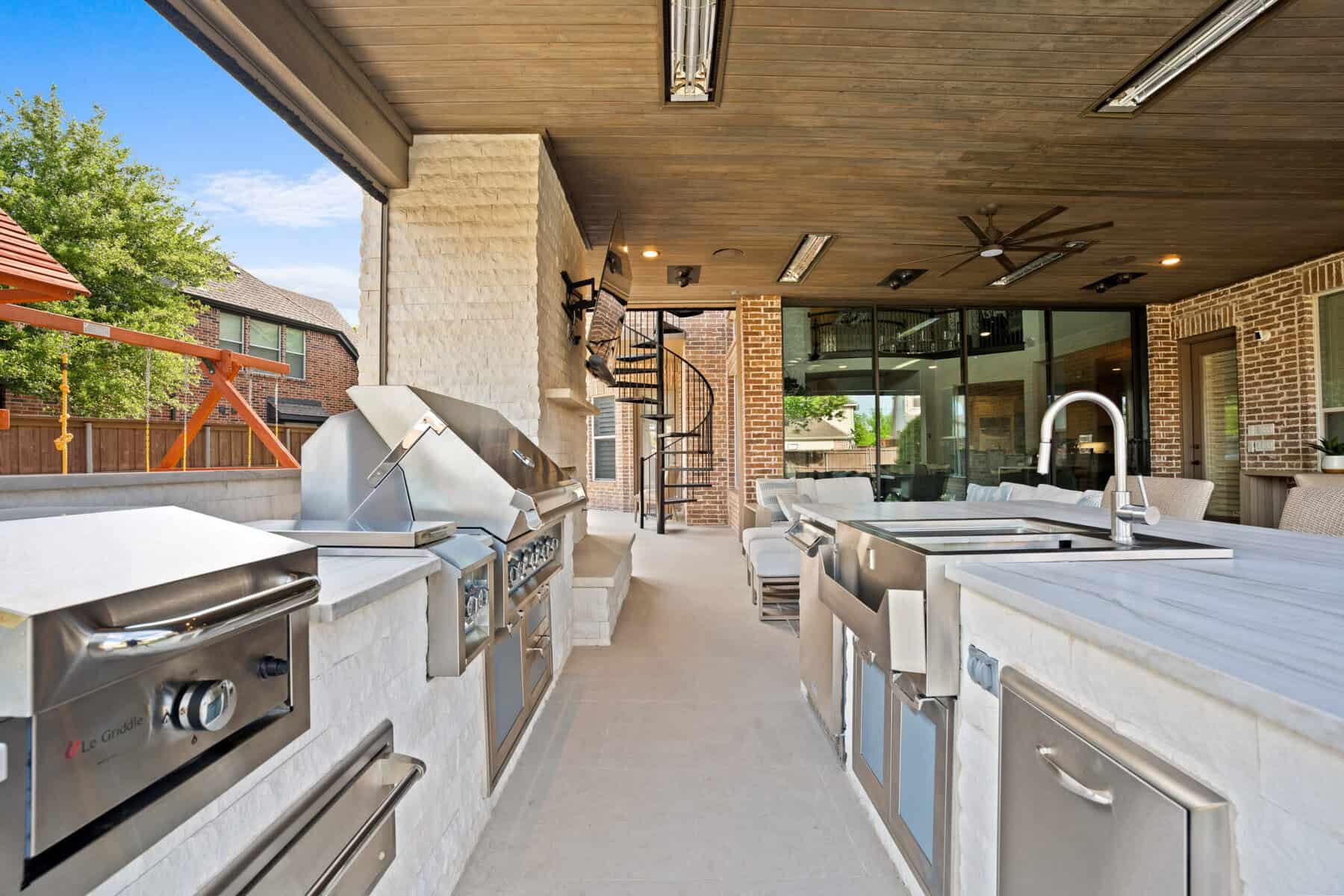
An outdoor kitchen is one of the most valuable additions you can make to a North Texas backyard, especially given how much of the year is genuinely comfortable outside here – DFW sees roughly 8 to 9 months of usable outdoor weather, from March through November. Outdoor kitchens offer a practical way to cook and entertain outdoors and add real resale value in a market where buyers increasingly expect them.
Between gas lines, foundation work for our clay soil, and permitting across DFW cities, an outdoor kitchen isn’t a weekend DIY project for most homeowners – it’s a build where the right contractor makes the difference between a space that lasts decades and one that needs costly repairs in a few years. This guide walks through what it actually costs in North Texas, what the professional build process looks like, and the material and design decisions that matter most in our climate, so you know what to expect and what to ask for when you bring in a pro.
Table of contents
How Much Does an Outdoor Kitchen Cost in North Texas?
Based on real North Texas project data, most DFW outdoor kitchens fall in these ranges:
- Basic grill station (6-8 linear feet): $8,000-$15,000
- Mid-size kitchen with prep space and storage (10 ft): $15,000-$25,000
- Full L-shaped kitchen with premium stone and multiple appliances (12+ ft): $25,000-$36,000+
The DFW average lands around $17,000, at a typical local rate of roughly $400 per linear foot for the structure itself, before appliances and utility work.
A few things drive cost higher specifically in North Texas:
- Gas line trenching – running a gas line from the house typically adds $500–$2,000+ depending on distance
- Foundation prep – our expansive clay soil requires proper base prep to keep the structure from cracking or shifting within a few years; skipping this is the most common (and expensive) mistake homeowners make
- Heat-resistant materials – stainless steel, porcelain, and Dekton countertops cost more up front but hold up far better than budget alternatives through repeated 100°F+ summers
If you want a number specific to your yard rather than a general range, a free estimate will get you there faster than guessing from national averages.

What to Expect: The Outdoor Kitchen Build Process
Every outdoor kitchen project follows the same five phases, whether it’s a simple grill station or a full L-shaped build. Here’s what happens at each stage, and what North Texas conditions specifically add to the process.
- Consultation & Estimate
Your contractor learns how you want to use the space, reviews the property, and helps define the right design – including location (shade, wind protection, ventilation for smoke and cooking odors, and proximity to existing utilities) and material selection.
Material choice matters more in North Texas than most climates:
Stainless steel: most heat- and UV-resistant, higher upfront cost, lowest long-term maintenance
Stone or brick veneer: classic look, holds up well, mid-range cost
Wood: lowest cost, but requires the most upkeep to survive Texas summers long-term
Not sure what separates a good outdoor kitchen contractor from one to avoid? Our guide to choosing an outdoor living contractor covers the licensing, insurance, and contract details worth checking before you sign anything. - Design & Approval
Your project scope, materials, and details get finalized, and HOA or city approval is addressed here if your project needs it. Most North Texas cities, including Frisco, Plano, McKinney, and Lewisville, require a permit for any outdoor kitchen involving gas, electrical, or plumbing.
- Preparation & Scheduling
Before your project can move onto the schedule, a few things typically need to be in place:
• Signed contract and required deposit
• HOA approval paperwork, when applicable
• A property survey or plot showing property lines, if requested
• Time for permits, material ordering, and delivery; custom or specialty materials can carry longer lead times
This is also when gas, electrical, and water lines get planned. If digging is involved, Texas 811 gets contacted to mark utility lines before work starts, though utility providers control the marking timeline, which can add a few days. - Construction & Communication
Your project manager coordinates the work, required inspections, and updates throughout installation. This includes foundation and base work; proper prep for North Texas’s expansive clay soil is what keeps the structure from settling or cracking within a few years, followed by cabinetry, countertops, and appliance installation.
A few things can affect the timeline during this phase:
• Weather: rain, wind, extreme temperatures, and saturated soil can delay outdoor work
• Inspections: some phases can’t continue until required inspections are completed
• Materials: custom or specialty pieces may need to be reordered or adjusted mid-project in rare cases
Keep kids and pets away from active construction areas, and expect some noise, dust, and equipment on-site; that’s normal for this phase, not a sign something’s off track. - Final Walkthrough & Enjoyment
Your contractor reviews the completed work with you, tests every appliance, answers care and maintenance questions such as stainless steel needs periodic cleaning, stone or stucco may need resealing every few years, and closes out the project. Final payment is typically collected at completion unless your contract states otherwise.
Things to Consider Before You Begin
Patio Cover or Pergola
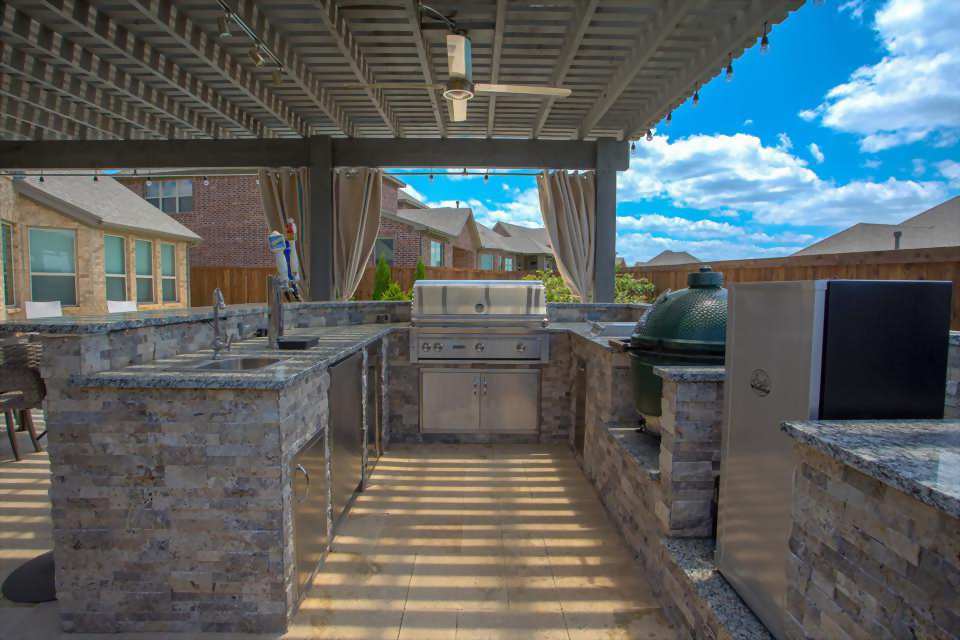
A patio cover or pergola extends your outdoor kitchen’s usability through Texas summers and the occasional winter cold front, letting you cook and entertain comfortably most of the year instead of just a few peak months.
Design Style
Match your outdoor kitchen’s style to your home: clean stainless steel for modern homes, brick or stone for traditional ones, natural wood and stone for rustic properties. Consistency here matters for resale value as much as for how the space feels day to day.
Add Ons
Popular add-ons include a fireplace for cool-weather ambiance, a pizza oven, a griddle for added cooking flexibility, outdoor speakers or a TV, and a beer tap or wine fridge. Each adds cost, so it’s worth prioritizing based on how you’ll actually use the space.
Frequently Asked Questions
How much does an outdoor kitchen cost in North Texas?
Most DFW outdoor kitchens cost between $8,000 for a basic grill station and $36,000+ for a full L-shaped kitchen with premium finishes, averaging around $17,000. Cost mainly depends on size, appliances, countertop material, and utility work.
Do I need a permit for an outdoor kitchen in DFW?
Yes, most North Texas cities – including Dallas, Frisco, Plano, and McKinney – require permits for outdoor kitchens involving gas, electrical, or plumbing work. Processing typically takes 1 to 3 weeks depending on the city.
What materials hold up best to North Texas heat?
Stainless steel, porcelain, and Dekton countertops resist fading, cracking, and heat damage better than budget alternatives through repeated Texas summers. Proper foundation prep for our clay soil is just as important as material choice for long-term durability.
What should I expect once construction starts?
Some noise, dust, equipment, and temporary disruption are normal. Weather and required inspections can shift the schedule, so a tentative start date may move if it rains or an inspection needs to be completed before the next phase can begin.
Can I build an outdoor kitchen myself?
Simple, grill-only setups with no gas, water, or electrical work are sometimes DIY-friendly. Anything involving gas lines, plumbing, or a permanent structure on North Texas clay soil generally needs a licensed contractor; both for code compliance and to avoid foundation problems down the road. See our guide to choosing an outdoor living contractor for what to look for.
Conclusion
Building an outdoor kitchen is one of the highest-value additions you can make to a North Texas backyard. Done right, with proper foundation prep and heat-appropriate materials, it holds up for years and adds real value to your home. The biggest factor in getting there is who builds it: our guide to choosing an outdoor living contractor walks through what to check before you sign a contract. For more on planning a complete backyard build, see our guide to backyard living in North Texas.
Request a free estimate to get real numbers for your yard, anywhere in Frisco, Plano, McKinney, Lewisville, and the rest of DFW.
Want the full process in one place? Download our Ultimate Guide to Planning Your Outdoor Living Project, a free PDF covering what to expect before, during, and after construction, including HOA and permit steps, timeline factors, and homeowner prep tips.
Recent Posts
Texas Best Fence & Patio Named Best of Denton County 2026
September 29, 2026
Luxury Outdoor Living Ideas for High-End Homes
September 4, 2026
Categories
Request an Estimate Today
Now that you’re thinking of the main types of outdoor structures
and their uses, you can create a concept that works for your
family. Keep in mind the purpose of the structure, whether natural
light in your home is a factor, and where you want the focal point
of your backyard to be. Once your gears get turning, reach out to
request an estimate on your concept.
and their uses, you can create a concept that works for your
family. Keep in mind the purpose of the structure, whether natural
light in your home is a factor, and where you want the focal point
of your backyard to be. Once your gears get turning, reach out to
request an estimate on your concept.
Request an Estimate